
Key Takeaways:
- Food safety extends beyond the food itself and includes the materials that come into contact with food.
- As a result, chemical safety is an important consideration when evaluating food packaging materials, including the potential presence of substances such as phthalates.
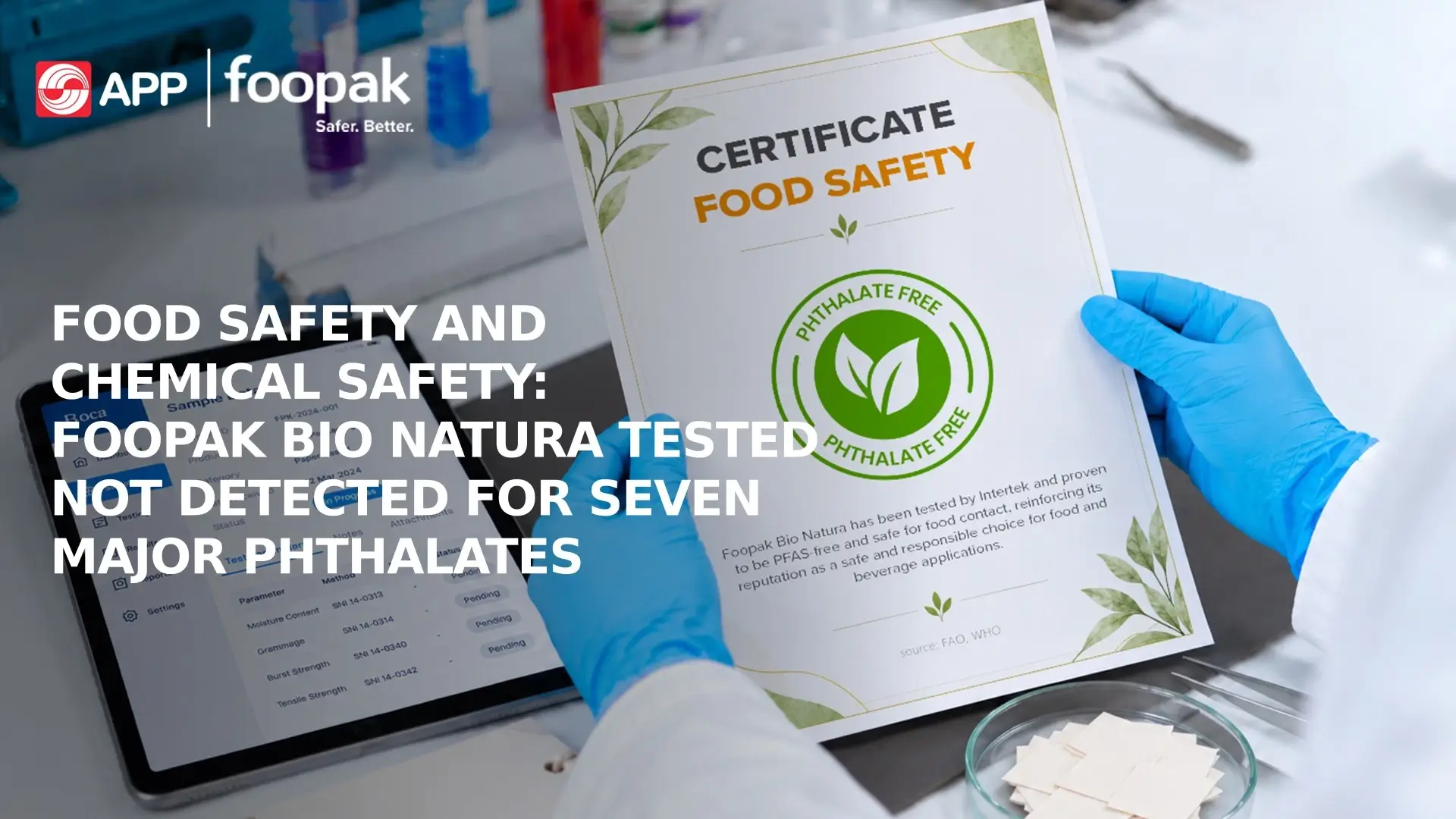
- Foopak Bio Natura was independently tested by Intertek Indonesia for seven phthalates, with all seven reported as Not Detected (ND) at a method detection limit of 50 mg/kg (ppm).
Food safety is essential for protecting consumers and ensuring that food remains safe throughout the supply chain. However, keeping food safe involves more than the ingredients, processing, handling, and storage of the food itself. The materials used to package and handle food are also part of this broader system.
This is particularly relevant to World Food Safety Day 2026, which highlights the importance of turning evidence into practical solutions for safer food. The World Health Organization (WHO) and the Food and Agriculture Organization of the United Nations (FAO) emphasize the importance of scientific evidence and data in understanding and addressing food safety risks.
For food packaging, this evidence-based approach can also be applied to the materials that come into contact with food. Testing can provide more objective information about specific substances and help businesses make informed decisions when selecting packaging materials.
Chemical Safety Is Part of Food Packaging Safety

While food safety discussions often focus on biological hazards, the materials used to package food can also raise chemical safety considerations. This makes the composition of food-contact packaging an important part of the broader food safety conversation.
Chemical safety involves understanding the substances present in a material and considering whether certain substances may pose concerns under their intended conditions of use. For food packaging, this can include considering substances that could potentially migrate from packaging materials into food.
Among the chemical groups that have received attention in food-contact applications are phthalates, which are commonly associated with the use of plasticizers.
According to the U.S. Food and Drug Administration (FDA), phthalates have been used as plasticizers in various applications, including certain food packaging and food-contact applications. The safety of individual phthalates depends on factors such as the specific substance, its use, exposure, and available toxicological information.
This makes information about the presence of specific phthalates relevant when evaluating the chemical characteristics of food packaging materials. It also highlights the broader idea of cleaner chemistry, where material design considers not only functional performance but also the substances used and the transparency of their chemical characteristics.
For food packaging, cleaner chemistry can therefore be supported by clear material information and, where relevant, independent testing of substances that may be of interest to customers and brand owners.
Why Do Plasticizers Matter in Food Packaging?
Plasticizers are substances used in various materials to improve properties such as flexibility, softness, or processability. Phthalates are one group of chemicals that have been used as plasticizers.
In food packaging, one consideration is whether substances from packaging materials could migrate into food. Therefore, understanding the chemical characteristics of materials that come into contact with food can form part of a broader packaging safety assessment.
This is also where independent testing becomes valuable. Rather than relying only on general statements about chemical safety, testing can provide specific information about whether particular substances of interest are detected in a material.
For Foopak Bio Natura, the focus of the testing was on seven major phthalates.
Foopak Bio Natura Tested Not Detected for Seven Phthalates
Foopak Bio Natura was independently tested by Intertek Indonesia for seven phthalates. All seven were reported as Not Detected (ND) at a method detection limit of 50 mg/kg (ppm). The analysis used solvent extraction and GC/MS, with reference to IEC 62321-8:2017.
The seven tested phthalates were:
- DEHP — Di(2-ethylhexyl) Phthalate
- DBP — Dibutyl Phthalate
- BBP — Benzyl Butyl Phthalate
- DIBP — Diisobutyl Phthalate
- DINP — Diisononyl Phthalate
- DIDP — Diisodecyl Phthalate
- DNOP — Di-n-octyl Phthalate
The results mean that none of the seven tested phthalates was detected at or above the method detection limit under the specified testing conditions. It is important to note that “Not Detected” does not mean absolute zero. Rather, it means the substances were not detected using the specified testing method and detection limit. The test also applies specifically to the seven phthalates analyzed and does not cover every possible plasticizer or chemical substance.
As a result, the testing provides specific, independently verified evidence that these seven tested phthalates were Not Detected in the tested Foopak Bio Natura material at the stated detection limit.
What Does the Test Result Mean for Food Packaging?
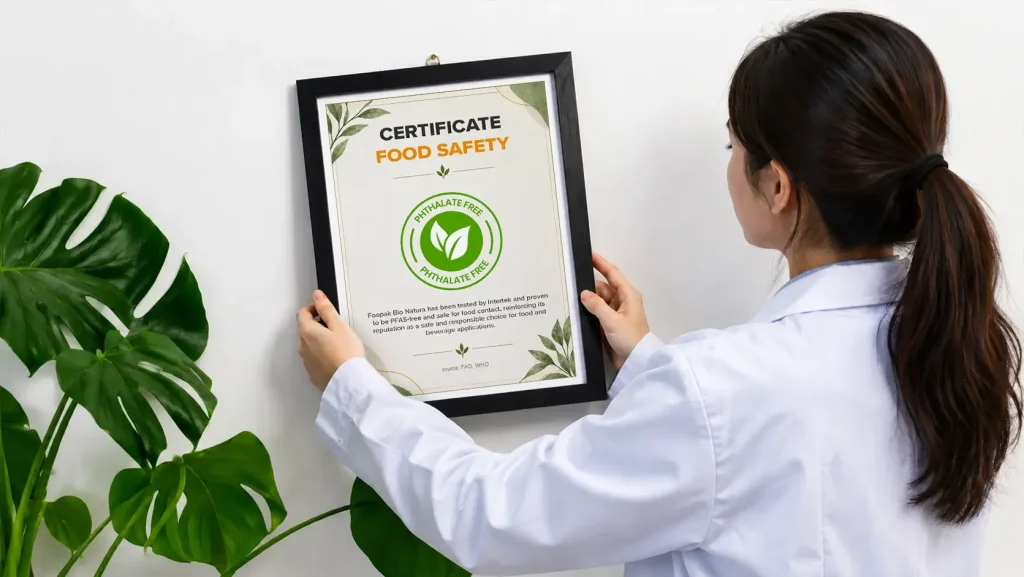
The result provides specific evidence that can be considered alongside other material and food-contact requirements when evaluating packaging. For customers and brand owners, this can be particularly useful when chemical transparency is part of their material selection criteria.
Independent Testing Provides Objective Evidence
The testing was conducted by Intertek Indonesia, providing laboratory-based evidence regarding the seven phthalates tested in Foopak Bio Natura.
This gives customers more specific information than a general statement about chemical safety. Instead, the test identifies the substances that were examined and documents the result under defined testing conditions.
As a result, customers can use the test report as part of their broader evaluation of food packaging materials.
Greater Chemical Transparency
As expectations around material transparency increase, brand owners and packaging users may need clearer information about the chemical characteristics of the materials they choose.
The Foopak Bio Natura testing provides that information for seven specific phthalates. Since all seven were reported as Not Detected, the result offers additional evidence for customers assessing the presence of these substances in the tested material.
This can be particularly relevant for customers who have specific requirements regarding plasticizers or phthalates in food packaging.
Addresses Specific Substances of Interest
The value of the test also comes from its specificity. Instead of making a broad claim about all chemicals or all plasticizers, the testing identifies seven individual phthalates and provides a result for each one.
This makes the information easier to understand and evaluate against specific customer or material requirements.
At the same time, the scope of the testing should remain clear. The results apply to the seven phthalates tested and should not be interpreted as a test for every possible plasticizer or chemical substance.
Complementing Foopak Bio Natura’s Material Technology
The phthalate testing forms part of the broader material story of Foopak Bio Natura.
Foopak Bio Natura uses proprietary water-based coating technology for its barrier properties. The independent testing provides additional information about the chemical characteristics of the finished paperboard, complementing its functional and food-packaging properties.
Together, these attributes support a more comprehensive approach to food packaging, where performance, material design, and chemical transparency can all be considered.
Supporting Safer Food Packaging
Food safety requires attention across the entire food supply chain. For food packaging, this means considering not only how a material performs, but also what information is available about its chemical characteristics.
That is why chemical safety can be an important part of evaluating food-contact packaging. And when specific substances are a concern, independent testing can turn a general question about chemical safety into more concrete, documented evidence.
For Foopak Bio Natura, Intertek Indonesia independently tested seven phthalates: DEHP, DBP, BBP, DIBP, DINP, DIDP, and DNOP. All seven were reported as Not Detected at a method detection limit of 50 mg/kg (ppm).
The result provides customers with specific laboratory evidence regarding these seven phthalates and supports greater transparency when evaluating food packaging materials.
FAQ
1. What does phthalate-free mean?
Phthalate-free means that a product or material does not contain phthalates, or that phthalates are not detected within the limits of a specified testing method. The exact meaning depends on the product specifications and testing criteria. For food packaging, independent testing can provide evidence regarding the presence of specific phthalates in a material.
2. Are phthalates microplastics?
No. Phthalates are chemical compounds commonly used as plasticizers to improve the flexibility and processability of certain plastics. Microplastics, on the other hand, are tiny plastic particles. Although phthalates may be associated with plastic materials, they are chemicals rather than plastic particles.
3. Are phthalates harmful?
The potential health effects of phthalates depend on the specific compound, the level and duration of exposure, and other factors. Some phthalates have raised health concerns due to evidence of potential endocrine and reproductive effects. However, the risks vary among individual compounds, so phthalates should not be treated as a single substance with identical health effects. Evaluating their presence in food-contact materials is one way to support informed material selection.