Key Takeaways:
- Foopak Anchor Bio is a coated paperboard designed for food packaging, combining barrier performance, edge-wick resistance, stiffness, and food-safety properties.
- Its aqueous coating technology provides resistance to moisture and liquid exposure, with one-side and two-side coating configurations available.
- The paperboard is specified for paper trays, paper plates, food boxes, and cake boxes, with different grammage and thickness options to suit packaging requirements.
As food packaging evolves, brands and converters are looking for materials that can balance food safety, functionality, and environmental considerations. Paperboard can offer a practical packaging format, but food applications also require protection against moisture and liquid seepage while maintaining the structural properties needed during use.
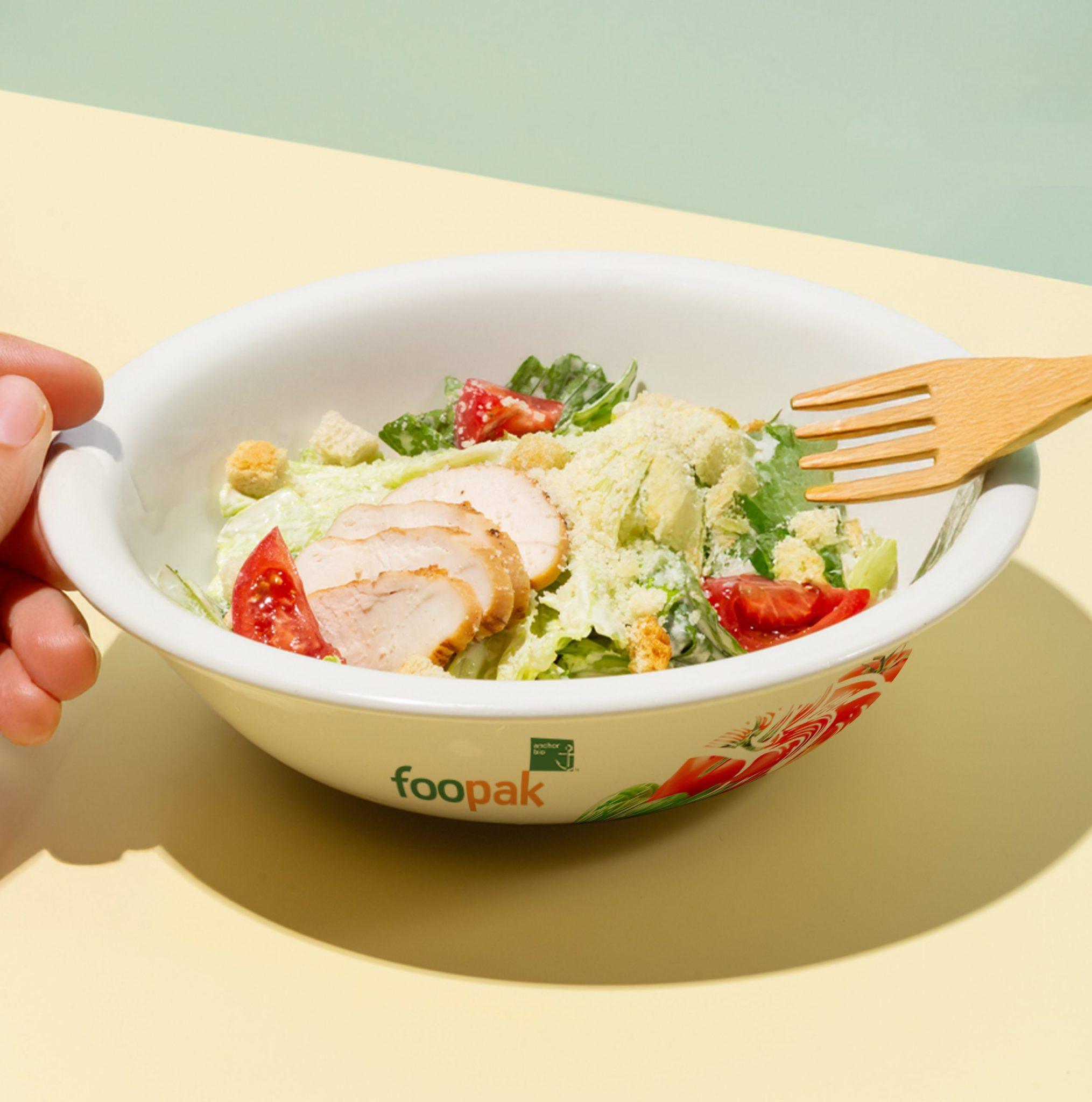
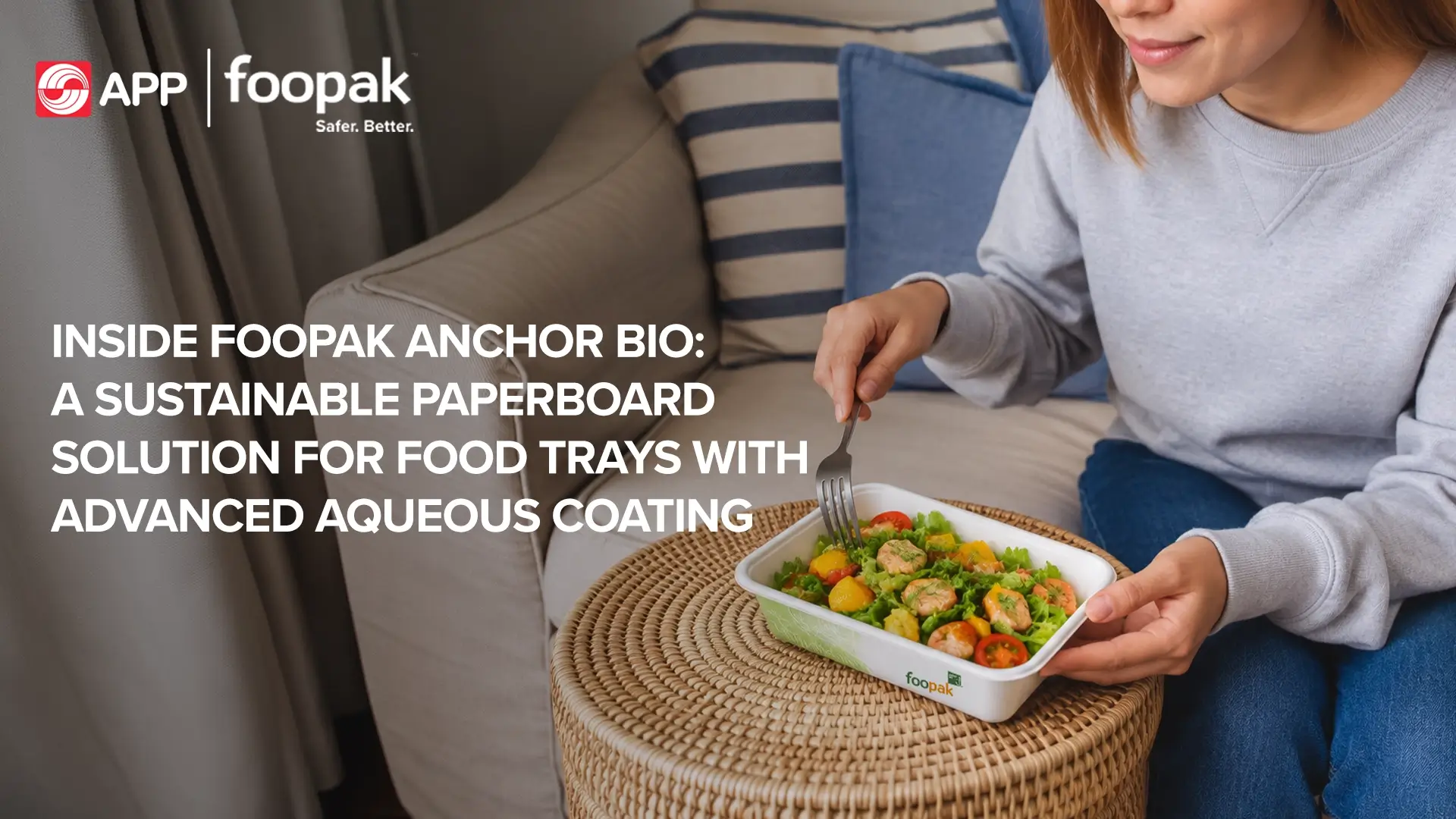
As part of APP Group’s Foopak portfolio, Foopak Anchor Bio is a paperboard solution developed with special coating technology to replace plastic lining. The material is designed to offer barrier performance, strong edge-wick resistance, printability, and food-safety properties for a range of food packaging applications.
Read More: Burger Packaging Shouldn’t Be Greasy: How Foopak Natural Greaseproof Paper Fixes It
Aqueous Coating Technology for Sustainability and Performance
One of the key features of Foopak Anchor Bio is its coating technology designed to replace plastic lining. The temporary data sheet describes both the one-sided and two-sided coating versions. Both versions are described as premium-quality paperboard developed with special technology to replace plastic lining and support more environmentally friendly packaging.
The paperboard is also designed with properties relevant to food-contact packaging. The data sheet states that Foopak Anchor Board meets food-safety aspects according to the US FDA and complies with PFAS-free requirements.
For printing, the top or printed side is designed to provide better printing quality compared with the other side of the paperboard. The recommended printing method listed in the data sheet is offset printing.
Together, these properties make Foopak Anchor Bio a paperboard option for food packaging formats where barrier performance, food safety, and presentation are important considerations.
Key Features of Foopak Anchor Bio

Foopak Anchor Bio combines barrier performance, edge-wick resistance, and structural properties for food packaging applications. Its technical specifications also provide different grammage and thickness options across its one-side- and two-side-coated versions.
Strong Barrier Performance
Moisture and liquid can affect the performance of paperboard packaging, particularly when food or beverages come into contact with the packaging material. Barrier performance is therefore an important consideration when selecting paperboard for food applications.
Foopak Anchor Bio is designed to provide barrier performance as part of its coating technology. The data sheet describes the paperboard as offering excellent barrier performance and reliable protection for the packaged product.
Edge Wick Resistance for Better Protection
When paperboard is cut during the converting process, its exposed edges can become potential pathways for liquid to enter the material. Strong edge-wick resistance can therefore help protect the packaging from liquid seepage.
Foopak Anchor Bio is designed with strong wicking resistance to prevent liquid seepage on the cutting side. The technical specifications list maximum values of 5 mm for the hot-water edge-wick test and 1.6 kg/m² for the 1% lactic acid test.
This property can be particularly relevant for food packaging formats where the paperboard’s cut edges may encounter moisture or liquid.
Structural Integrity for Food Applications
Food packaging also needs to maintain its shape and provide sufficient stiffness for its intended application. Foopak Anchor Bio’s technical specifications include CD (Cross Direction) and MD (Machine Direction) stiffness measurements, which indicate how well the board maintains its shape and resists bending in different directions.
Rather than presenting one combined grammage range for the product, the available specifications differ between the two coating configurations.
The one-side-coated version is specified in grammages from 205 to 375 g/m², with thicknesses from 320 to 595 µm. The two-side-coated version is specified from 215 to 385 g/m², with thicknesses from 330 to 605 µm.
The different specifications give converters several paperboard options while allowing them to select between one-side and two-side coating configurations according to the intended application.
The data sheet also lists microwave compliance from -18°C to 175°C for 2 minutes, providing an additional performance characteristic for applicable food packaging uses.
Read More: Foopak Anchor Plus: Sustainable Strength for Frozen, Seafood, and Fresh Food Packaging
Suitable Applications
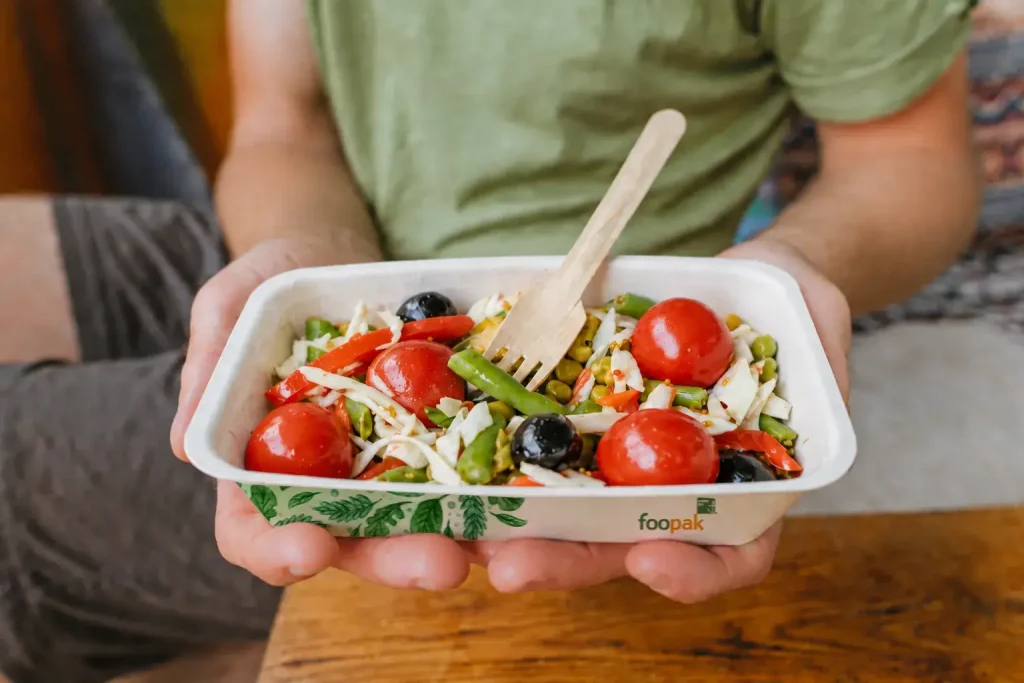
Foopak Anchor Bio is listed for several food packaging applications, including paper trays, paper plates, food boxes, and cake boxes.
Paper Trays
Paper trays can require a combination of barrier performance, edge-wick resistance, and stiffness to help protect their contents. Foopak Anchor Bio is listed for paper tray applications, with properties designed to help prevent liquid seepage through the cutting side.
Paper Plates
Paper plates need to maintain their form while being used with food. Foopak Anchor Bio is also specified for paper plate applications, supported by its barrier, edge-wick, and stiffness properties.
Food Boxes
Food boxes can encounter moisture or liquid from their contents, making barrier performance and edge-wick resistance relevant considerations. Foopak Anchor Bio is listed for food box applications, providing another paperboard option for food packaging.
Cake Boxes
Foopak Anchor Bio is also listed for cake box applications. Its printing characteristics can support packaging where appearance and presentation are important, while its food-safety and PFAS-free properties address considerations for food-contact packaging.
Discover Foopak Anchor Bio for Sustainable Food Packaging
For converters and brands looking for paperboard designed to replace plastic lining, Foopak Anchor Bio combines specialized coating technology with barrier performance, edge-wick resistance, stiffness, and food-safety properties.
As part of APP Group’s Foopak portfolio, the paperboard is available in one-side- and two-side-coated configurations and is listed for applications including paper trays, paper plates, food boxes, and cake boxes.
With multiple grammage and thickness options, as well as offset-printing compatibility and microwave compliance within the specified conditions, Foopak Anchor Bio offers a range of properties for food packaging applications.